ProxAI accelerates drug discovery for hard-to-drug targets by engineering custom protein modulators that inhibit key protein-protein interactions or induce degradation. All validated in cells.




Hard-target programs tend to stall at one of four walls. Find yours below, then see how we get through it.

The human genome encodes more than 600 E3 ligases, yet most degraders recruit CRBN or VHL. Both are expressed in nearly every tissue, so degradation happens body-wide, side effects included.
Our way through We engineer binders for the E3 ligase you choose: novel, proprietary or restricted to the tissue you want to reach.

The human kinome has 518 members, most built around the same conserved ATP pocket. A ligand designed for one often hits its relatives too, muddying your data and narrowing the safety margin.
Our way through We design binders against the surface features that set your target apart from its relatives, not the pocket they share.

Protein-protein interfaces typically span 1500 to 3000 Ų of mostly flat surface. A small molecule covers 300 to 1000 Ų and needs a pocket to anchor in. Many disease drivers offer none.
Our way through We build binders that cover the interface itself and block it sterically. No pocket required.

Your target has five functional domains and you need to study one. A knockout eliminates all five, so you can’t tell which loss caused the phenotype.
Our way through We block one domain surface. The protein stays intact and its other four functions keep working.
Engineered against the exact surface you choose, then validated in physiologically relevant cells before it reaches you.
Bring it to a 30-minute scoping call. We’ll tell you which wall it’s up against, and whether a protein binder is the right way through.
Book a free target reviewPrefer to write? Send us your target instead.
Two routes, one engineering platform. Both are designed from structure and validated in cells before they reach you. Your target decides which route you need.
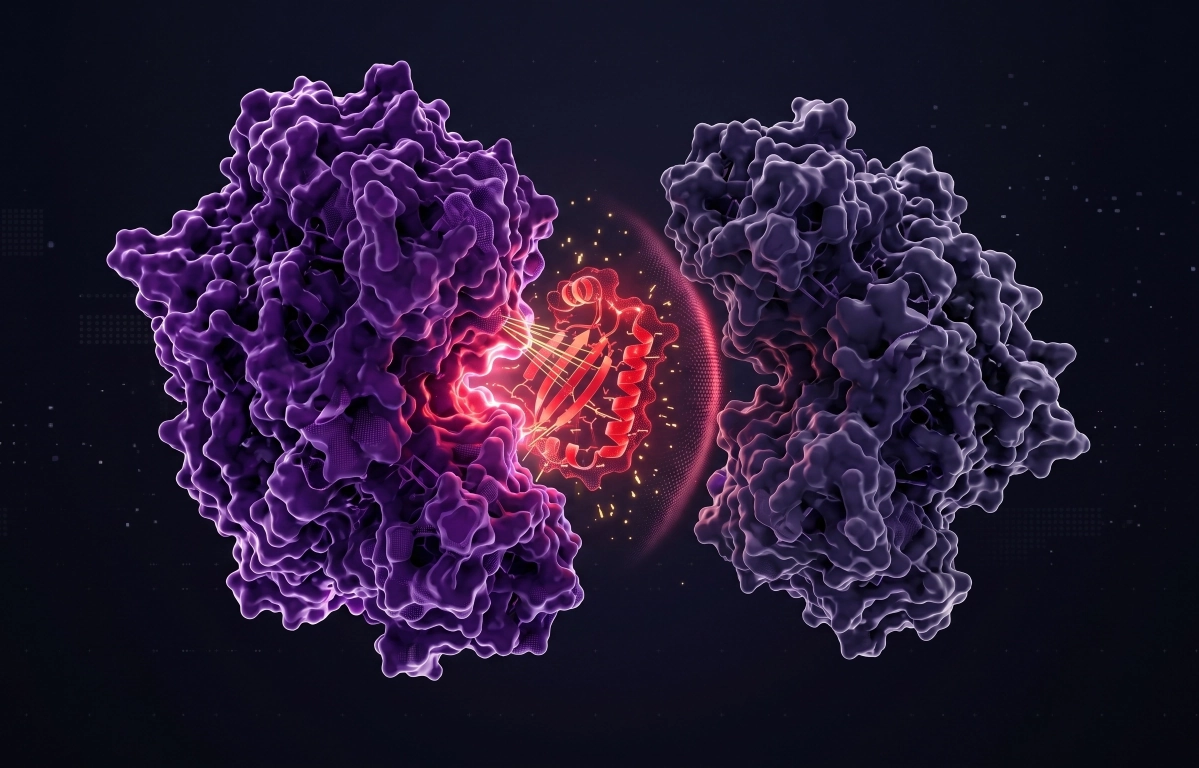
We engineer a protein that binds the exact domain surface you name, then sits across it. The partner protein can no longer reach the interface, so one function goes quiet and the others stay. No pocket required.
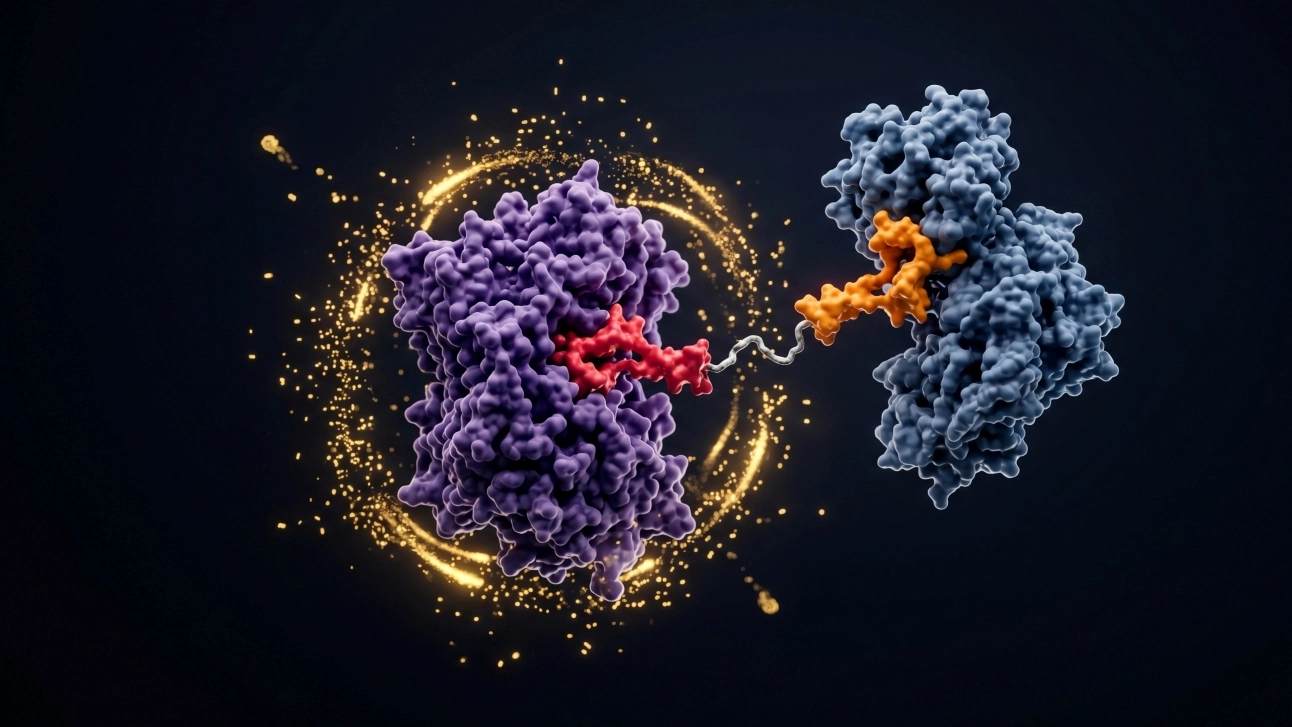
The same target-recognition protein is joined by a linker to an E3 ligase binder. The construct brings the ligase to your target, the target is ubiquitinated, and the proteasome clears the whole protein. You choose which E3 ligase does the work.
Target engagement confirmed in a mammalian cell line by flow cytometry and PLA. Not a model, a measurement.
Sequences in FASTA, a ternary-complex model in PDB, raw and analyzed data, expression and stability notes, and the written rationale for the epitope we chose. All of it in your secure portal.
12 to 15 weeks from intake to handover, with a concrete design brief in your hands inside the first week. See the four stages.
The first conversation is pre-NDA and non-confidential. Ask, and a mutual NDA comes back within two business days, before any structure or sequence changes hands.
Bring a target and the outcome you want. In 30 minutes you leave with the route we would take, the assays that would prove it, and the timeline. If a protein binder is not the right tool for your target, we will say so on that call.
Prefer to write? Send us your target instead. Either way, the next thing you get is a route, not a quote.
A connected modulator design, protein engineering, and cellular-validation workflow.
Share your target, its biology, and desired modulation mechanism at no cost, no obligation. Expect a concrete design brief within the week.
We computationally design and rank modulator candidates against your target's interface. Modulators are ready for cell validation.
We perform functional binding or degradation assays in physiologically relevant cell lines.
Review your complete data package through our secured portal, including: sequences, structural models, cell validation results, and engineering documentation.
Start with a non-confidential target description and program objective at no cost, no obligation.
Start My Target Review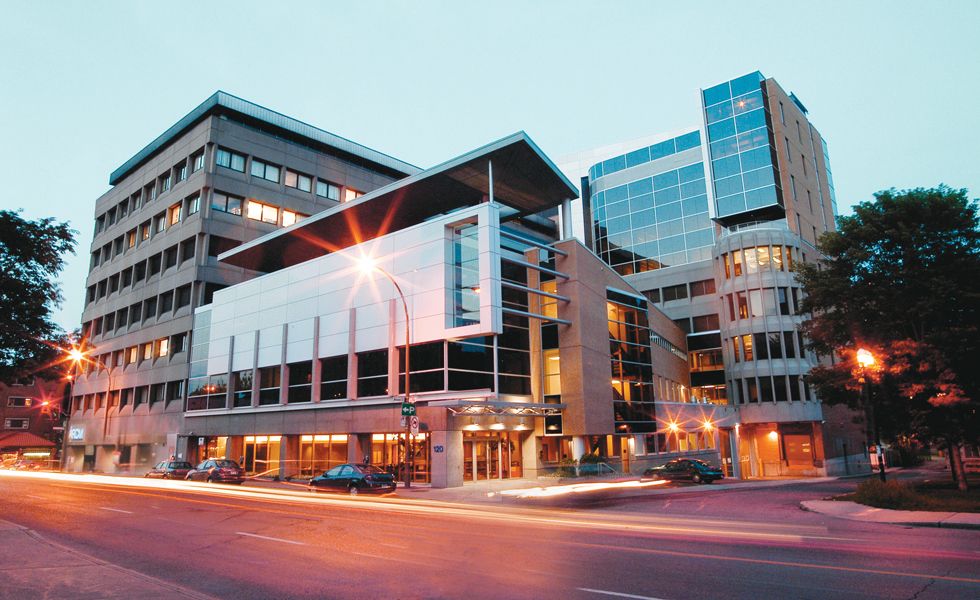

Physical lab operations embedded at IRCM in Montreal.
Experimental prioritization of computationally designed candidates.
Confirms inhibition or degradation activity directly in cells.
Each program is quoted as a fixed price for the target, agreed in writing before any work starts, so there is no open-ended hourly billing. The number depends on the route (inhibition or degradation), how many binders you want carried through validation, and the assays needed to prove the result. You get that quote after the scoping call, not before we understand the target.
A CRO runs the protocol you hand it. The hard part here is deciding which surface to engage and what geometry will work, which is the part we do and document. Doing it in-house means standing up a generative design stack and a wet lab that can validate its output, then keeping both busy. We are already paired: designs are generated computationally and confirmed in cells in our own lab at IRCM, and you engage one program at a time.
Three cases. If you need an orally available small molecule in the clinic, a protein binder is the wrong format. If there is no experimental structure and no confident predicted model of your target, we have nothing to design against yet. And if your target is extracellular and a catalogue antibody already does the job, buy the antibody. We will tell you which of these applies on the call rather than after a purchase order.
A non-confidential target name or class, the biological outcome you want, and any constraint we should design around (E3 preference, cell line, delivery format). No sequences or coordinates at this stage.
Intracellular and extracellular protein targets where a structure or a confident predicted model exists.
Binder sequence(s) in FASTA, a structural model of the predicted ternary complex (PDB), raw and analyzed validation data, expression and stability notes, and a written engineering rationale for the epitope and geometry chosen. Data is fully accessible through our secure portal where you can visualize your protein complexes and download the files.
The initial form is pre-NDA. Request an NDA in the form and we return a mutual NDA within two business days before any structure or sequence is shared.
Ask it on the scoping call. Thirty minutes, pre-NDA, and you leave with a route for your target whether or not you work with us.
Book a free target reviewPrefer to write? Send us a message instead.
Book a 30-minute scoping call to talk through your target, E3 strategy, and the right engineering path.
Book a meetingOpens Google Calendar · 30 min · Pre-NDA